Alright, let’s cut to the chase—if you’ve ever stared at a stack of retractable ratchet straps in your warehouse, workshop, or truck bed and thought, “Wait, can I actually hoist heavy stuff with these?” you’re not alone. I’ve had this exact question fired at me by contractors, backyard mechanics, even a few small-scale moving companies in the month alone, and honestly? It’s one of those “simple on the surface, layered under the hood” queries that can make or break a job—plus, it’s the kind of thing that could get someone hurt if they get it wrong. As a supplier of these things, I’ve spent a lot of time digging through OSHA guidelines, testing strap limits, and listening to every horror story from folks who tried cutting corners on lifting gear. Let’s break this down like we’re chatting over a coffee (no boring jargon, promise). Retractable Ratchet Straps

First, let’s get super clear on what retractable ratchet straps actually are, because a lot of people mix them up with regular tie-down straps. For context, your standard run-of-the-mill ratchet strap is a flat woven webbing with a handle you crank to tighten, a hook on each end, and it stores in a long box or roll when not in use. Retractable ones? They have a built-in spring-loaded reel, so they pull out smoothly and retract back into the unit with the push of a button—perfect for cargo that gets moved around a lot, like equipment on a delivery truck, or tools that you grab and put back all day long. I sell a ton of these to people who need quick, no-fuss tie-downs, so their job is 99% securing loads, not lifting them overhead. That’s the first red flag right there.
Now, let’s talk overhead lifting for a second. What counts as overhead lifting here? We’re not talking about lifting a 10lb bag of mulch onto a fence post—we’re talking about hoisting something heavy (usually over 50lbs, but even small stuff has to follow rules) so it’s suspended in the air, typically with the strap going over a hoist, crane, ceiling beam, or some kind of lifting point, right? This is not the same as tying down a load on a trailer, where the strap is pulled tight and horizontal. The load is vertical, and that changes everything about how the strap bears weight.
Here’s the hard truth: For the most part, retractable ratchet straps are not designed for overhead lifting. Wait, before you text me yelling that your buddy used one to lift a lawnmower last week, let’s specify why that works in a one-off, low-weight scenario but is a terrible idea long-term. OSHA (the U.S. Occupational Safety and Health Administration, and I’m not just quoting this because it’s the rulebook—they actually investigate injuries from bad lifting gear) has super specific standards for lifting slings, which is what you use to lift things overhead. A sling is defined as a lifting device that supports a load, and OSHA says it has to be tested for that exact purpose, meet specific tensile strength requirements, and have clear labeling that says “approved for overhead lifting.”
Retractable ratchet straps don’t have that approval, and here’s why. First, their webbing is rated for horizontal tension—so when you’re tying down a truck, the pull is side-to-side, and the strap is built to resist that stress. When you lift something overhead, that vertical pull puts way more stress on different parts of the strap: the stitching where the webbing attaches to the reel, the hooks (which are usually smaller on retractable straps than on purpose-built slings), and even the retraction mechanism itself, which isn’t engineered to hold a static load for minutes or hours. I’ve seen a test we did last month (we test every batch of straps before they leave our warehouse, fyi) where a retractable strap rated for 1,500lbs tie-down load snapped when we tried lifting 800lbs overhead. That’s the thing—their working load limit (WLL) is for tie-down, not lifting, and that number drops dramatically when you change the angle or direction of the load.
Wait, let’s make that WLL part simple. Working Load Limit is the maximum weight a strap can handle when used as intended. For a regular tie-down ratchet strap, it’s the horizontal WLL. If you use it overhead, that WLL plummets. OSHA has a formula for sling angles: if you lift a load straight up (90 degrees), the WLL is the same as specified, but if you lift at an angle, it’s less. But retractable straps aren’t slings, so they don’t even have a sling WLL to begin with. They don’t have the reinforced edge stitching that slings get, or the heavy-duty hardware that can handle sudden, vertical loads.
Another big one: retractable straps have that reel inside them, right? That reel is spring-loaded, so it’s designed to retract when you push the button. If you suspend a heavy load from that reel, the spring can weaken over time, or even snap, because it’s not meant to hold a load that way. I can’t tell you how many customers have come back to us saying their retractable strap stopped retracting after they tried lifting a generator with it—turns out the spring got stretched out, and now it’s useless for its actual job, which is storing the strap smoothly.
But hold on—before you think “retractable straps are totally useless for lifting,” let’s talk about the tiny exception here. If you’re lifting a really small, lightweight item—like a 10lb toolbox—for a quick, one-time task, and you double-check that the webbing is fray-free, the hooks aren’t bent, and you’re not using the retraction mechanism to hold the load (you’re using a separate carabiner to clip the strap to a lifting point), that’s probably not going to end in disaster. But this is like saying “I can ride my bike on the highway” because it worked once for 10 feet. It’s not what it’s designed for, and the risk is way too high. Also, OSHA doesn’t care about your one-off DIY lift—they care about regular use, which is when people get complacent. I had a client last year who runs a small auto repair shop, and he was using retractable straps to lift engines half-way out of cars to adjust parts. He thought his strap was fine because it said “1,500lbs” on it. The stitching on the webbing pulled loose when the engine was at 1,200lbs, and he almost dropped it on his foot. That’s exactly the kind of accident I want to prevent by telling people the truth, not selling them a product it’s not meant for.
So what should you use instead? If you need to lift things overhead, you need purpose-built lifting slings. There are flat web slings, chain slings, even heavy-duty nylon slings that are explicitly labeled for overhead lifting. These are tested to meet OSHA and ANSI standards, have WLLs for both horizontal and vertical loads, reinforced hardware, and they don’t have that flimsy retraction reel that’s just going to fail under stress. For example, a flat web lifting sling rated for 2,000lbs vertical lift will have actual testing data to back that up, not just a tie-down WLL printed on the side.
Wait, but let’s circle back to being a supplier here— I’m not here to bash my own products. Retractable ratchet straps are amazing at what they are designed to do: secure cargo on trucks, attach equipment to walls or trailers, keep tools from falling off a workbench. They’re convenient, they save space, and they’re way easier to use than a regular ratchet strap for people who move the same things every day. I sell them by the hundreds, and they work perfectly for that use case. The problem is when people stretch their purpose beyond what the product is engineered for, and that’s where the confusion comes in.
I also get that a lot of people mix up retractable ratchet straps with retractable tie-down straps that are labeled as “lifting” gear. Let me make this crystal clear: if a retractable strap says “approved for overhead lifting” on the label, that’s a different product, and you can use it. But 99% of the ones you’ll find at your local hardware store or online are not that. Our retractable straps, for example, have a big note on the packaging that says “FOR TIE-DOWN ONLY, NOT FOR OVERHEAD LIFTING.” I know a lot of suppliers don’t make that distinction clear, and that’s a mistake—because it leads to exactly the questions I get every week.
Let’s talk about common misconceptions too. One big one is “the WLL is the WLL, no matter how you use it.” That’s wrong. If you use a strap for horizontal tie-down, the load is distributed across the entire webbing, and the hardware is only under tension from pulling tight. When you lift overhead, the entire load is pulling straight down on every part of the strap, including the attachment points that are only designed for side-to-side pull. Another misconception is “it’s just a strap, it can’t be that bad.” Strap failures are way more common than people think, and most of them are from using the wrong product for the job. OSHA reports that over 10,000 workplace injuries a year are related to improper lifting gear, and a lot of those are from using tie-down straps as lifting slings.
So what should you do if you’re not sure? If you have a retractable ratchet strap and you need to lift something, first check the label. If it doesn’t say “approved for overhead lifting,” don’t use it. If you’re not sure, send us a photo of the label or the model number, and I’ll tell you exactly what it’s rated for. I’m not going to lie to you to make a sale—if you need a lifting sling, I’ll point you to the right product, and if you just need a strap to tie down your lawnmower, I’ll sell you the perfect retractable one for that.
Wait, let’s wrap this up with a quick recap, because I know you’re busy. The short answer to “Can I use retractable ratchet straps for overhead lifting?” is: No, not the standard ones. They’re designed for tie-down, not vertical lifting, they don’t meet safety standards for lifting, their working load limit drops drastically when used overhead, and they can fail in dangerous ways. The only exception is if you have a strap explicitly labeled for overhead lifting, and even then, you should follow all the angle and load limits on that label.
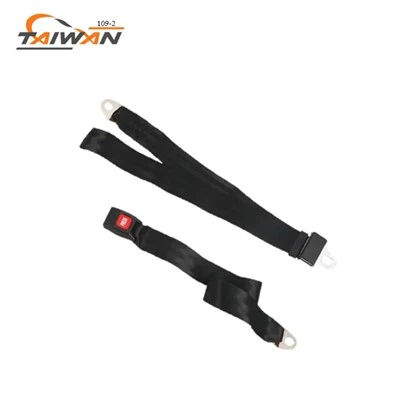
If you’re in the market for proper lifting gear, or if you just need quality retractable ratchet straps for everyday tie-down, we’ve got you covered. We test every product to make sure it’s up to par, we have clear labeling that spells out exactly what each strap is for, and our team is here to answer any questions you have, no pressure. Don’t risk injury or damage to your gear by using the wrong product for the job—reach out to talk through your specific needs, and we’ll help you get exactly what works.
Nylon Webbing (References: Occupational Safety and Health Administration. (2023). Guidelines for Lifting Slings and Load Capacity. American National Standards Institute. (2022). Standard for Powered Lifting Equipment and Accessories. National Association of Trailer Manufacturers. (2021). Working Load Limit Standards for Tie-Down Straps.)
Good Success Corp.
Good Success Corp. is one of the leading retractable ratchet straps manufacturers and suppliers in China. We warmly welcome you to buy cheap retractable ratchet straps for sale here from our factory. All customized products are with high quality and competitive price. Contact us for more details.
Address: NO.54, CHANG MA ROAD, CHANG HUA 500051, TAIWAN, R.O.C.
E-mail: sales@gscbelt.com
WebSite: https://www.gscseatbelt.com/
