As a supplier of common mode inductors, I’ve witnessed firsthand the crucial role these components play in modern electronic systems. In this blog, I’ll delve into the functions of common mode inductors, exploring their significance and practical applications. Common Mode Inductor
Understanding Common Mode Noise
Before we discuss the function of common mode inductors, it’s essential to grasp the concept of common mode noise. In electrical circuits, there are two types of noise: differential mode noise and common mode noise. Differential mode noise occurs between the signal and return paths, while common mode noise appears simultaneously on both the signal and return paths with the same magnitude and phase.
Common mode noise is often generated by external sources such as electromagnetic interference (EMI) from power lines, radio frequency interference (RFI), or switching transients in electronic devices. This type of noise can cause various problems in electronic systems, including malfunctions, data errors, and reduced performance.
The Function of a Common Mode Inductor
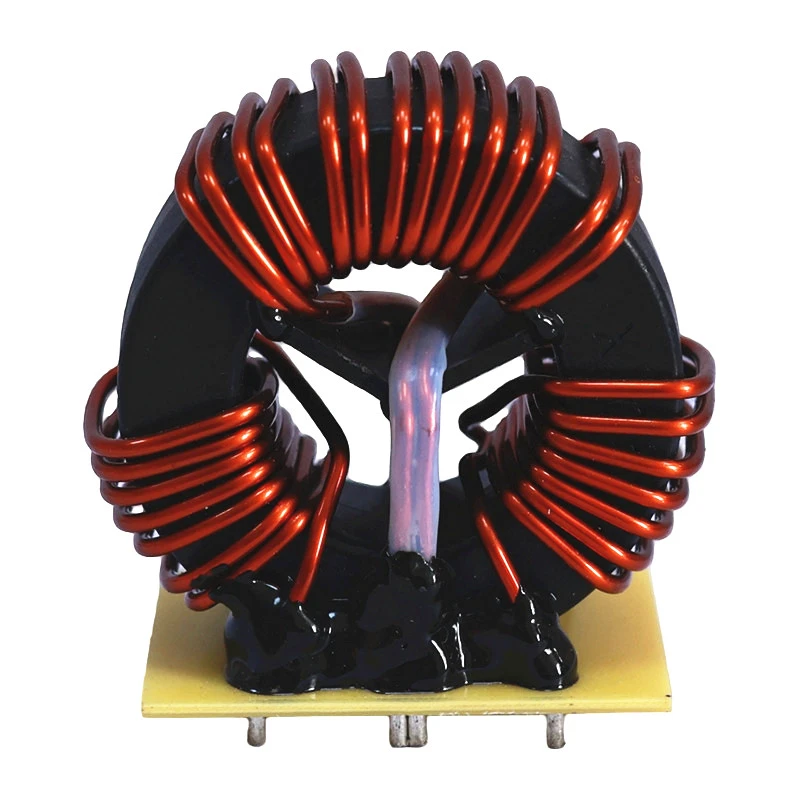
A common mode inductor, also known as a common mode choke, is a passive electronic component designed to suppress common mode noise while allowing differential mode signals to pass through unaffected. It consists of two or more coils wound on a common magnetic core. The key function of a common mode inductor is to create a high impedance for common mode currents while maintaining a low impedance for differential mode currents.
Suppression of Common Mode Noise
The primary function of a common mode inductor is to attenuate common mode noise. When common mode currents flow through the inductor, they generate magnetic fields that are in phase with each other. These magnetic fields add up in the core, creating a high inductance for common mode currents. As a result, the inductor presents a high impedance to common mode noise, effectively blocking its propagation through the circuit.
For example, in a power supply circuit, common mode noise can be introduced from the input power line. By installing a common mode inductor at the input of the power supply, the inductor can filter out the common mode noise, preventing it from entering the power supply and affecting the performance of the connected electronic devices.
Preservation of Differential Mode Signals
While suppressing common mode noise, a common mode inductor allows differential mode signals to pass through with minimal attenuation. Differential mode currents flow in opposite directions through the coils of the inductor. As a result, the magnetic fields generated by the differential mode currents cancel each other out in the core, creating a low inductance for differential mode signals.
This property is crucial in applications where the integrity of differential mode signals needs to be maintained. For instance, in high-speed data transmission lines such as Ethernet cables, common mode inductors are used to suppress common mode noise without degrading the differential mode signals, ensuring reliable data transmission.
EMI and RFI Filtering
Common mode inductors are widely used in EMI and RFI filtering applications. Electromagnetic interference and radio frequency interference can cause significant problems in electronic systems, including interference with nearby electronic devices and non-compliance with electromagnetic compatibility (EMC) standards.
By incorporating common mode inductors into electronic circuits, designers can effectively reduce the emission of electromagnetic radiation and improve the immunity of the system to external interference. For example, in consumer electronic products such as smartphones, tablets, and laptops, common mode inductors are used to filter out EMI and RFI, ensuring that the devices meet the relevant EMC regulations.
Power Line Noise Filtering
Power lines are a common source of common mode noise in electronic systems. Electrical appliances, industrial equipment, and power generation facilities can introduce various types of noise into the power grid, which can then be transmitted to connected electronic devices.
Common mode inductors are often used in power line filters to suppress the common mode noise present in the incoming power. By filtering out the noise, the inductor helps to improve the power quality and protect the electronic devices from damage caused by electrical disturbances.
Applications of Common Mode Inductors
Common mode inductors are used in a wide range of applications across various industries. Here are some of the most common applications:
Power Supplies
In power supply circuits, common mode inductors are used to filter out common mode noise from the input power line and the output of the power supply. This helps to improve the power quality and reduce the electromagnetic interference generated by the power supply.
Data Transmission Lines
High-speed data transmission lines such as Ethernet cables, USB cables, and HDMI cables are prone to common mode noise. Common mode inductors are used in these cables to suppress the common mode noise and ensure reliable data transmission.
Automotive Electronics
In the automotive industry, common mode inductors are used in various electronic systems, including engine control units, infotainment systems, and lighting systems. They help to reduce the electromagnetic interference generated by the automotive electronics and ensure the proper functioning of the systems.
Industrial Equipment
Industrial equipment such as programmable logic controllers (PLCs), motor drives, and power inverters often generate and are susceptible to common mode noise. Common mode inductors are used in these devices to filter out the noise and improve the reliability and performance of the equipment.
Choosing the Right Common Mode Inductor
When selecting a common mode inductor for a specific application, several factors need to be considered, including:
Inductance Value
The inductance value of the common mode inductor determines its impedance to common mode currents. A higher inductance value generally provides better suppression of common mode noise. However, a higher inductance value also increases the size and cost of the inductor. Therefore, the inductance value should be chosen based on the specific requirements of the application.
Current Rating
The current rating of the common mode inductor refers to the maximum current that the inductor can handle without saturating. It is important to choose an inductor with a current rating that is higher than the maximum operating current of the circuit to ensure reliable operation.
Frequency Response
The frequency response of the common mode inductor determines its effectiveness in suppressing common mode noise at different frequencies. Different applications may require different frequency responses, so it is important to choose an inductor with a frequency response that matches the frequency range of the common mode noise.
Size and Form Factor
The size and form factor of the common mode inductor are important considerations, especially in applications where space is limited. There are various types of common mode inductors available in different sizes and form factors, such as through-hole and surface mount devices.
Conclusion
In conclusion, common mode inductors play a vital role in modern electronic systems by suppressing common mode noise and ensuring the reliable operation of electronic devices. As a supplier of common mode inductors, I understand the importance of providing high-quality components that meet the specific requirements of our customers.
Common Mode Inductor If you are in need of common mode inductors for your electronic applications, I encourage you to contact us for a detailed discussion. Our team of experts can help you choose the right common mode inductor for your specific needs and provide you with the best solutions.
References
- Grover, F. W. (1946). Inductance Calculations: Working Formulas and Tables. Dover Publications.
- Ott, H. W. (2009). Noise Reduction Techniques in Electronic Systems (3rd ed.). Wiley-IEEE Press.
- Paul, C. R. (2006). Introduction to Electromagnetic Compatibility (2nd ed.). Wiley.
Dongguan Hensiron Electric Co., Ltd.
As one of the most professional common mode inductor suppliers in China, we have world-leading production equipment and strong manufacturing capabilities. Please feel free to buy high quality common mode inductor made in China here from our factory. Customized orders are welcome.
Address: Building 4, Xinxing Industrial Zone, Wangao Road, Wanjiang Street, Dongguan City, China
E-mail: jessica@dghensiron.com
WebSite: https://www.dghensiron.com/
