Potassium oxalate, a chemical compound with the formula K₂C₂O₄, is a significant substance in various industries, including chemical manufacturing, photography, and analytical chemistry. As a supplier of potassium oxalate, I often encounter questions from customers about its properties, and one of the most frequently asked questions is about its boiling point. In this blog post, I will delve into the topic of the boiling point of potassium oxalate, exploring the scientific aspects and practical implications. Potassium Oxalate
Understanding Potassium Oxalate
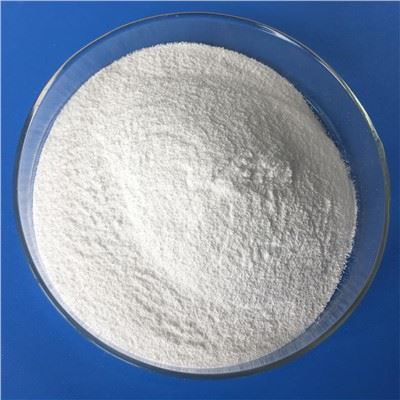
Before we discuss the boiling point, it’s essential to understand what potassium oxalate is. Potassium oxalate is a salt formed by the reaction of oxalic acid with potassium hydroxide. It exists in two common forms: the monohydrate (K₂C₂O₄·H₂O) and the anhydrous form (K₂C₂O₄). The monohydrate is a white crystalline solid, while the anhydrous form is a white powder.
Potassium oxalate has several important applications. In the chemical industry, it is used as a reducing agent, a complexing agent, and a precipitation agent. In photography, it is used as a developer and a fixing agent. In analytical chemistry, it is used as a standard for the determination of calcium and other metal ions.
The Boiling Point of Potassium Oxalate
Determining the boiling point of potassium oxalate is not as straightforward as it might seem. Unlike simple substances like water or ethanol, which have well – defined boiling points under standard conditions, potassium oxalate decomposes before it reaches its boiling point.
When heated, potassium oxalate undergoes thermal decomposition. The decomposition process is complex and depends on factors such as the heating rate, the presence of impurities, and the form of the potassium oxalate (monohydrate or anhydrous).
For the monohydrate form (K₂C₂O₄·H₂O), when heated, it first loses its water of crystallization around 100 – 120 °C. The reaction can be represented as:
K₂C₂O₄·H₂O(s) → K₂C₂O₄(s)+ H₂O(g)
As the temperature continues to rise, the anhydrous potassium oxalate further decomposes. The main decomposition products are potassium carbonate (K₂CO₃), carbon monoxide (CO), and carbon dioxide (CO₂). The overall decomposition reaction can be summarized as:
K₂C₂O₄(s) → K₂CO₃(s)+ CO(g)
This decomposition occurs at a relatively high temperature, typically above 360 °C. Since decomposition takes place instead of boiling, there is no well – defined boiling point for potassium oxalate in the traditional sense.
The lack of a specific boiling point can be a challenge in some applications. For example, in processes where distillation or evaporation is involved, the decomposition of potassium oxalate can lead to unwanted side reactions and the formation of by – products. However, in other applications, such as in the preparation of potassium carbonate from potassium oxalate, the decomposition property can be exploited.
Factors Affecting the Decomposition Temperature
Several factors can influence the temperature at which potassium oxalate decomposes:
- Purity: Impurities in potassium oxalate can act as catalysts or inhibitors for the decomposition reaction. For example, the presence of certain metal ions can lower the decomposition temperature by facilitating the reaction. On the other hand, high – purity potassium oxalate may have a slightly higher decomposition temperature as there are no foreign substances to initiate the reaction.
- Heating Rate: A faster heating rate can cause the decomposition to occur at a higher temperature. This is because the reaction kinetics are affected by the rate of heat transfer. When heated rapidly, the molecules do not have enough time to rearrange and react at lower temperatures, so the decomposition occurs at a higher temperature.
- Atmospheric Conditions: The presence of oxygen or other gases in the atmosphere can also affect the decomposition process. In an oxygen – rich environment, the carbon monoxide produced during decomposition may react with oxygen to form carbon dioxide, which can alter the overall reaction pathway and the decomposition temperature.
Practical Implications for Our Customers
As a supplier of potassium oxalate, understanding the decomposition behavior is crucial for our customers. For those using potassium oxalate in high – temperature processes, they need to be aware of the decomposition temperature to avoid unwanted side reactions. For example, in the chemical synthesis of other compounds using potassium oxalate as a reactant, the reaction conditions need to be carefully controlled to ensure that the decomposition does not occur prematurely.
On the other hand, for customers who are interested in using the decomposition products, such as potassium carbonate, the decomposition process can be optimized. By adjusting the heating rate and the atmospheric conditions, the yield of potassium carbonate can be maximized.
We also provide technical support to our customers to help them understand the properties of potassium oxalate and how to use it effectively in their applications. Our team of experts can assist with questions regarding the decomposition behavior, reaction conditions, and product handling.
Quality Assurance of Our Potassium Oxalate
At our company, we are committed to providing high – quality potassium oxalate. We use advanced manufacturing processes to ensure the purity and consistency of our products. Our quality control measures include strict testing of the raw materials, in – process monitoring, and final product analysis.
We test the potassium oxalate for its chemical composition, purity, and particle size. We also conduct thermal analysis to determine the decomposition temperature of each batch of our product. This allows us to provide our customers with accurate information about the properties of the potassium oxalate they purchase.
Contact Us for Your Potassium Oxalate Needs
If you are in the market for potassium oxalate, whether for industrial applications, research, or other uses, we are here to help. Our team of professionals is ready to answer your questions, provide technical support, and offer competitive pricing.

We understand that each customer has unique requirements, and we are committed to providing customized solutions. Whether you need a small quantity for laboratory testing or a large – scale supply for industrial production, we can meet your needs.
Ammonium Citrate Dibasic Don’t hesitate to contact us to discuss your potassium oxalate requirements. We look forward to establishing a long – term partnership with you.
References
- CRC Handbook of Chemistry and Physics. 99th Edition. CRC Press.
- "Thermal Decomposition of Potassium Oxalate Monohydrate" – Journal of Thermal Analysis and Calorimetry.
- "Applications of Potassium Oxalate in Chemical Synthesis" – Chemical Reviews.
Jiangsu Kolod Food Ingredients Co., Ltd.
As one of the most professional potassium oxalate manufacturers and suppliers in China, we’re featured by quality products and good price. Please rest assured to wholesale bulk potassium oxalate made in China here and get free sample from our factory. Customized orders are welcome.
Address: South Side of Weier Road, Guanyun Development Zone, Lianyungang City, Jiangsu Province, China
E-mail: sales1399@jskolod.com
WebSite: https://www.kolod-group.com/
