If you’ve ever walked through an industrial area—think sprawling warehouses, loading bays, and side streets where delivery trucks rumble up to loading docks—you might’ve glanced at those boxy, three-wheeled utility vehicles and thought, “What are those even for?” As a 250cc loading tricycle supplier, I get that question all the time. A lot of folks in manufacturing, logistics, and facility management write off these trikes as just “neighborhood toy” or something for small-town vendors selling fruit on the corner. But let’s cut the B.S.: a 250cc loading tricycle is way more capable than that, and it’s actually a solid workhorse for industrial areas. Let’s break it down, no sales fluff, just real-world stuff I’ve seen every single day with customers who swear by ’em. 250cc Loading Tricycle

First off, let’s talk the specs that matter for industrial spots, not the marketing garbage. A 250cc engine is the sweet spot here—big enough to pull a heavy load, small enough to not break the bank on gas or compliance. Industrial areas don’t play around with “lightweight” loads; you’re moving pallets of packaging, small parts for assembly lines, tool kits for maintenance crews, empty drums of chemicals, or even packaged food for a campus cafeteria. My 250cc trikes have a payload capacity right around 1,100 lbs, which is basically 10-12 standard 50lb bags of concrete, or two full standard pallets of small hardware. Wait, and before you ask: that’s not “max load on flat ground” — we tested these up 7% grade slopes, like the ramps leading to most loading dock doors, and they still pull that load without sputtering. I’ve got a customer in a metal stamping plant just outside Detroit who uses his every day to haul steel brackets from the main storage yard to three separate production lines, and he swears he’s never had it stall mid-ramp, even when he forgot to unload 100 lbs of leftover parts one time.
Now, let’s address the big industrial pain points that full-size trucks and vans suck at: space and maneuverability. Most industrial areas have strict rules about truck access. I don’t care if it’s a 2-ton delivery van—those things are too wide for the narrow service alleys that wind between rows of warehouses, or the tight spots inside a warehouse’s back-of-house where you can’t fit a 10ft long truck. Even semi-trucks, which are obviously way too big for anything less than a highway loading bay, can’t park anywhere without blocking fire lanes. A 250cc loading trike? It’s 6ft long, 3.5ft wide. That’s half the width of a standard van, so it can squeeze through a 4ft wide service alley like it’s nothing. I had a customer in a pharmaceutical facility tell me their forklift (which is basically a big slow truck) had to be rerouted around the entire back lot to get to their lab storage, but the trike can cut straight through a compressed area by the dumpster without bothering anyone. Also, parking? These trikes don’t take up a whole van spot. You can tuck one between two utility sheds in the warehouse yard, or park it right next to a loading bay door without blocking 3 other trucks. No wonder so many industrial maintenance teams now keep one in their fleet instead of a beat-up pickup.
Wait, what about durability? Industrial areas are dirty, man. We’re talking oil stains on the ground, dust from construction, rain that turns the lot into mud, even snow in some northern spots. A lot of cheap trikes rust or break after 6 months of hard use, but our 250cc models are built for that kind of wear. We use steel frame that’s powder-coated to resist rust, the engine is air-cooled (so no radiator to clog with industrial dust, which is a big one—radiators in cars get full of lint and stop working, but air-cooled engines just blow dust right out), and the cargo bed is made of scratch-resistant aluminum, so dragging pallets or metal parts doesn’t gouge it. I’ve got a customer in a construction materials yard in Houston that uses his trike to haul rebar and bricks around the lot, and he’s had it for 3 years, has never had to replace a part beyond standard oil changes. That’s way better than the old golf carts they used to use, which would break every other month and cost a fortune in repairs.
But let’s be real—this isn’t a one-size-fits-all, right? There are some industrial areas where a 250cc trike isn’t gonna cut it. If you’re moving full 4,000 lb pallets of heavy equipment parts, or running a cross-country logistics hub where you need to haul 10 pallets at a time, then yeah, a big truck is better. But for the 80% of daily tasks in industrial areas—intra-yard moves, small deliveries between on-site departments, tool runs to maintenance crews, picking up small shipments from the local freight depot, even hauling trash bins from the loading dock to the dumpster—this trike is perfect. A lot of people forget that industrial work isn’t just moving big stuff; it’s the tiny, constant trips that add up. If you’re a manufacturing plant, you don’t need a van to drive 100 yards from storage to line 3. You need a vehicle that can make that trip 20 times a day, without wasting gas, without taking up space, without getting stuck.
Another big one: cost. Let’s compare it to a small van. A used cargo van is at least $8,000, and gas for that is like 15 mpg. A 250cc trike is around $3,500 (way cheaper upfront), and it gets 70 mpg. Over a year, that’s like $1,200 in gas for the trike vs $4,500 for the van. Also, registration and insurance? Trikes are way cheaper—most states treat them like motorcycles, so registration is $20 a year, insurance is $50 a month vs $150 for a van. And maintenance? An oil change for the trike is $10, vs $50 for a van. For industrial operations, that adds up fast. I had a customer who used to have 2 vans for his small delivery runs, and he switched to 4 trikes, cut his fleet costs by 70% in the first 6 months. That’s not a typo—he told me the trikes pay for themselves in 12 months just in gas and maintenance savings.
Wait, what about regulatory stuff? I know industrial folks hate dealing with permits and rules. Most areas let you operate a 250cc trike on private property (which 99% of industrial areas are, so that’s easy). If you do need to take it on public roads to get to a nearby freight depot, it’s registered as a motorcycle, so no special permits needed beyond a standard driver’s license. Some cities actually prefer trikes for intra-warehouse traffic because they’re smaller and less likely to cause accidents than big trucks. I’ve never had a customer get fined for using one in an industrial zone—actually, the only time I’ve heard of a problem is when someone tried to use a 125cc trike, which is too weak to handle the loads, not the 250cc model.
Don’t get me wrong, I’m not here to act like these trikes solve every industrial problem. If you’re in a port where you’re moving intermodal containers, or a factory with a production line that runs 24/7 and you need to haul full pallets every hour, then a big truck or forklift is still the way to go. But for the day-to-day, smaller tasks that make up most of an industrial site’s workload? The 250cc loading tricycle is a game-changer. It’s not a toy, it’s a utility vehicle built for work.
I’ve seen guys use ’em for everything from hauling medical supplies in a hospital’s back lot (super quiet, so it doesn’t disturb patients) to moving landscaping materials for a big industrial campus, even hauling portable restrooms for construction sites. The versatility is insane. You can add a roof to shield loads from rain, a GPS tracker for fleet management, a lockable cargo box for expensive tools, even a small tow hitch to pull a small trailer for extra capacity. One of my customers added a winch to his trike and uses it to pull small pieces of heavy equipment out of mud in the construction yard—who would’ve thought?
Look, if you’re still on the fence, go walk around any industrial area right now. Chances are, if you see a trike, it’s not a vendor’s ice cream cart—it’s a work truck, moving stuff that full-size trucks can’t. We’ve been supplying these for 5 years now, and 9 out of 10 customers tell us they regret not switching sooner. They don’t have to deal with the headache of big trucks, the cost, the space issues, or the inefficiency. It’s just a simple, reliable vehicle that gets the job done.
So if you’re in industrial operations, and you’re tired of fighting for space on the lot, overpaying for gas, or wasting time waiting for big trucks to move 100 yards, a 250cc loading tricycle is worth a look. It’s not a trendy gadget, it’s a practical workhorse that fits right in where industrial areas need it most.
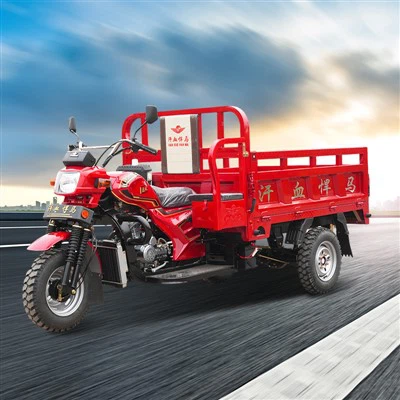
If you’re interested in seeing how a 250cc loading tricycle would work for your specific site, feel free to reach out to us to chat through your needs and check out our available models.
Electric Cargo Tricycle References
- National Highway Traffic Safety Administration. "Motorcycle and Tricycle Safety for Industrial Operations." 2022.
- Small Business Administration. "Cost-Saving Utility Vehicles for Warehouse and Industrial Facilities." 2023.
- Occupational Safety and Health Administration. "Space and Maneuverability Requirements for Intra-Facility Material Handling." 2021.
- Utility Vehicle Industry Association. "250cc Class Utility Tricycle Performance Metrics for Commercial Use." 2022.
Chongqing Hanxuehanma Industry Co., Ltd.
As one of the most professional 250cc loading tricycle manufacturers and suppliers in China, we offer a wide range of products with superior quality. Please feel free to wholesale advanced 250cc loading tricycle made in China here from our factory. Customized orders are welcome.
Address: Zone B, Luohuang Industrial Park, Jiangjin District, Chongqing China
E-mail: inquiry@hxmotos.com
WebSite: https://www.hxmotos.com/
