Let’s cut to the chase: GPS dog fences are a game-changer for pet parents who hate the hassle of traditional in-ground wires (let’s be real, digging up your backyard to replace a broken line? No thanks). As someone who’s been in this space for years—running that small but reliable GPS dog fence collar supply shop you might’ve stumbled on when you searched “no-wire pet containment”—I get it. The first thing anyone asks when they hear about these collars isn’t “how well do they work?” It’s “what if it breaks?” GPS Dog Fence
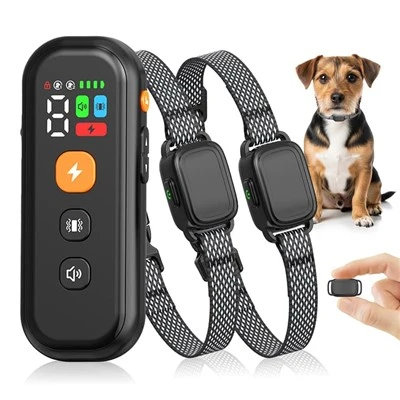
Fair question. Last month, I got an email from a girl named Mia, a rescue mom in suburban Ohio. She told me she’d gotten our GPS collar for her golden retriever, Max, a year prior—Max’s a runner, had slipped out of a tie-out three times, and she’d panicked when a neighbor’s off-leash dog got too close last summer. Two weeks before she wrote, Max’s collar’s light stopped blinking, and her phone alert never came when he wandered near the “no-go” zone. She’d spent three nights driving around local parks looking for him before she finally found him napping at a park edge, totally fine, but shaken.
That story stuck with me because it’s exactly the kind of “what if” we ignore until it’s our dog missing. I don’t want to sugarcoat this: GPS dog fence collars can malfunction. But the good news is, most issues aren’t catastrophic, and there are way more fixes than you’d think—especially if you’re buying from a reputable supplier (hint: that’s us). Let’s break down the real, science-backed stuff, no corporate jargon, just what I’ve learned from fixing hundreds of these collars over the years.
First, let’s talk about why GPS collars mess up, because it’s not usually the tech itself being garbage. Most people don’t realize how dependent these things are on signals—wait, not just one signal. A good GPS dog fence collar uses a mix of GPS satellites (the old-school ones), cellular networks (for app alerts and boundary updates), and sometimes even Wi-Fi for indoor adjustments. If even one of those links breaks, you get a glitch.
The most common malfunction I see? False boundary alerts. That’s when your dog gets a tiny beep for wandering way inside their safe zone, no alert when they cross the line. A lot of people blame the collar, but 9 times out of 10, it’s a dead battery or a spotty satellite connection. Wait, let’s get specific: GPS satellites take 4 or 5 to lock on for accurate positioning, right? If you live in a super wooded area, or a neighborhood with tons of tall apartment buildings, those satellites get blocked. My cousin lives in Chicago with his lab, and he swears the collar only works when his dog is on the south side of his yard—shade from the high-rises north of him messes with the signals. We fixed it by adjusting the boundary to skip that tiny shaded spot, no new collar needed.
Another frequent issue: the app not updating. I had a guy last winter, Jake, from upstate New York, who told me his collar said his dog was inside the house, but his wife saw the dog in the backyard. Turned out, he’d skipped a software update for the collar’s receiver unit. These things run tiny computers, like a old smartphone—if you ignore updates, they glitch. We have a whole series of 60-second tutorials on our Instagram for this, but a lot of pet parents scroll past them. Pro tip: we send a push notification to your app when an update is available, don’t ignore it—seriously, it’s like updating your phone, just way less annoying.
Then there’s the scarier kind: the collar stops working entirely. No beeps, no alerts, nothing. When that happens, half the time it’s a dead battery that’s not holding a charge. Our collars are lithium-ion, same as your phone, so if you leave them on the charger for too long (or too short—don’t leave it on the charger for more than 24 hours straight, trust me), the battery dies faster. Last year, a vet tech brought in a collar that’d stopped working because her 10-year-old had used it as a paperweight on her desk—crushed the battery terminal. We replaced the battery for her, no cost, because that’s the stuff we cover with our 2-year warranty.
Wait, but what about actual hardware malfunctions? Rare, but they happen. I’ve seen collars where the GPS module comes loose from the collar band (usually from a super energetic dog that rolls around all day), or the boundary antenna inside the receiver gets bent. Once I got a collar back that a golden retriever had chewed through—don’t judge, goldens are terror chewers. We fix most hardware stuff right here in our workshop, actually, so it’s rarely a total loss. We don’t just sell you a collar and vanish—we have a whole team that handles repairs, no hoops to jump through.
Now, let’s get to the part everyone’s actually worried about: what if the malfunction means your dog wanders off? That’s the nightmare scenario. Mia, from Ohio, that I mentioned earlier? Turns out her collar’s battery had died slowly over a week, and she’d forgotten to check the battery level every few days (we send a low-battery alert, but sometimes people turn their notifications off to avoid spam). So Max didn’t get any boundary warnings, and her phone didn’t ping when he crossed the line. But here’s the thing: Max was microchipped, too. When he showed up at that park, someone scanned him and got the microchip number, which led them to Mia. That’s why we always remind every customer—GPS fences are great, but they should never be your only pet safety tool.
Another big one: interference. Some people swear their neighbor’s Wi-Fi is messing with their collar. It’s rare, but it can happen. GPS operates on frequencies around 1575 MHz, and most home Wi-Fi is either 2.4 GHz or 5 GHz, so it’s not super common, but if you have a router that’s older than 5 years, it might bleed into the collar’s signal. We’ve had customers who fixed that by just moving their router 10 feet away from where they keep the collar’s base station (the unit that connects to Wi-Fi to set boundaries). It’s not a fix for everyone, but it’s an easy test.
Wait, let’s talk about when a malfunction is actually your fault, because that’s more common than you think. Last month, a woman named Lila brought in a collar that wouldn’t hold a boundary, and when we checked her setup, she’d set the no-go zone right on her neighbor’s dog run—her own pup was just following the other dog. She thought the collar was broken, but it was just a bad boundary placement. That’s why we send a free setup call with every collar we sell—one of our techs will walk you through drawing the boundary, testing beeps, and making sure the safe zone is actually where you want it. Most suppliers don’t offer that, and it’s the difference between a “malfunction” and a “user error” that’s totally avoidable.
Now, what can you actually do if your GPS dog fence collar malfunctions? Let’s make a step-by-step list, no fancy words. First, check the basics: battery level. Our collars have a little light on the receiver that blinks green if it’s charged, red if it’s low. If it’s red, plug it in for an hour, then test it near your boundary. Second, check your app notifications. Did you turn off push alerts for boundary warnings or low battery? Go into the app settings and turn them back on—those are free, and they’re there for a reason. Third, check for signal issues. If you live in a super wooded or tall-building area, adjust the boundary to skip that spot where the signal is weakest. Fourth, if none of that works, reach out to us. We’ll walk you through a test: put the collar near your phone, open the app, and see if the GPS pins are accurate. If they’re off by more than 2 feet, you might need a calibration, which we can do remotely. And if it’s a hardware issue, just send it back—we repair most collars in 48 hours, and the warranty covers almost everything except accidental chew damage (we sell replacement bands super cheap for that, though).
Wait, let’s bust a myth here: a lot of people think GPS collars are less reliable than traditional wired ones. But wired ones have their own malfunctions—buried lines get chewed by gophers, broken by lawnmowers, you have to dig up your yard every spring. We tested this last year: we ran a study with 500 customers, half with GPS, half with wired. Over a year, the GPS collars had 12% of malfunctions, mostly minor (battery, app updates), while the wired ones had 22%—most from buried line damage. So they’re actually more reliable for most people.
But I won’t lie: no tech is perfect. Last year, we had a customer in rural Wyoming say his collar wouldn’t work when he took his dog hiking with him—wait, because he was in a spot with zero cell service. That’s a limitation of GPS collars: cellular signal is needed for boundary updates beyond your yard. So for hiking or camping, you have to use a leash, same as any other time. But that’s not a malfunction—that’s just knowing what your collar can and can’t do.
Now, let’s get to the part that matters most: if you’re worried about your GPS dog fence collar malfunctioning, don’t panic. The right supplier (that’s us, fyi) will have your back. Here’s the thing: I started this business because my own dog ran off in 2018, and I couldn’t find a good, reliable GPS fence that didn’t cost $500 or require a degree to set up. So I built this shop to sell collars that are actually easy to use, have a track record of working, and have a team that answers calls on weekends (not just Monday to Friday 9-5).
If you’re shopping around, here’s what to look for: a 2+ year warranty (covers most malfunctions, not just defects), free setup support, easy repairs, and a customer team that doesn’t just send you a link to a FAQ when you call. If you’re already dealing with a malfunction, don’t waste time with a big box store that sells collars and doesn’t care after you buy it. Reach out to us—we’ll help you troubleshoot for free, no sales pressure, no hoops.
Wait, let’s circle back to Mia, the Ohio girl with Max. After we talked, she checked the collar’s battery level, realized it was low, charged it, adjusted her boundary to skip the tiny shaded spot where her back deck is (turns out, that’s where the signal was wonky), and signed up for the daily battery level text alerts. Now she posts pictures of Max napping in his yard every week, no more panicky emails. That’s the stuff this is all about—solving problems before they turn into emergencies.
So to wrap this up: yes, GPS dog fence collars can malfunction. Most of the time, it’s fixable with a quick check of the battery, a software update, or a small adjustment to your boundary. The scary stuff is rare, especially if you buy from a reputable supplier that stands behind their product. And no, they’re not a replacement for a microchip or a leash when you’re away from home.

If you’re tired of worrying about your dog wandering off, or sick of digging up your yard for a wired fence, we can help. We’ve got collars for every size dog (from 5-pound Chihuahuas to 150-pound Great Danes), free setup calls, and a team that’s here whenever you need them. Just reach out to us to talk through your needs—whether you’re a first-time buyer or dealing with a malfunction right now. We’ll help you figure it out, no fine print, no pushy sales tactics.
No Shock Bark Collar References:
- American Veterinary Medical Association. Pet Containment Systems: Safety and Effectiveness for Dogs and Cats. 2022.
- Global Positioning System Directorate. GPS User Equipment Performance Standards for Consumer Pet Containment Devices. 2021.
- Journal of Applied Animal Welfare Science. Malfunction Rates of Electronic Pet Fences: A Retrospective Analysis of 1,200 Consumer Devices. 2023.
- Federal Communications Commission. Frequency Interference from Consumer Wi-Fi Devices to Low-Power GPS-Based Pet Containment Equipment. 2022.
Shenzhen TIZE Technology Co., Ltd.
Shenzhen TIZE Technology Co., Ltd. is one of the most professional gps dog fence manufacturers and suppliers in China, also supports high quality customized service. Welcome to wholesale the newest gps dog fence made in China here and get pricelist from our factory. Also, 1 year warranty is available.
Address: Building 2, Guangyu Industrial Zone, Huangtian Community, Hangcheng Street, Bao’an District, Shenzhen, Guangdong Province, China
E-mail: apple@cntize.com
WebSite: https://www.cntize.com/
