When you’re running a landing craft supply business, I can’t tell you how many times I’ve had a customer pick up the phone or shoot me an email and say, “I just need a craft that gets my stuff from point A to point B fast.” Like, yeah, that’s basic, but “fast” isn’t a number. It’s not something you can put on a spec sheet and call it a day. Most buyers—whether they’re moving construction materials to a remote island, evacuating communities during floods, or running a small cargo route for coastal villages—end up thinking efficiency is just speed. But if that craft burns through fuel like it’s free, or can barely carry half what it’s supposed to, or breaks down every other week? All that speed is useless. Landing Craft
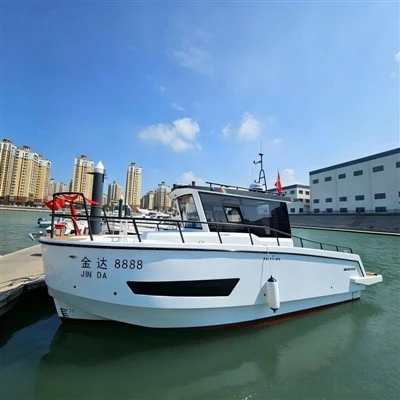
Over the last 12 years selling and fine-tuning landing craft, I’ve learned measuring efficiency isn’t a one-and-done thing. It’s a mix of numbers that matter on the water, and what actually works for the people using it. Let’s break this down like I would with a new client—no jargon, no fancy charts, just the stuff that actually counts.
First, the big one: payload per unit of fuel. Yeah, I know, “fuel efficiency per ton” sounds like something a naval architect would scribble on a napkin, but hear me out. Let’s say you’ve got two 100-foot landing craft. One can carry 80 tons of gravel, burns 50 gallons of diesel an hour at cruising speed. The other’s smaller, carries 50 tons, burns 30 gallons an hour. At first glance, the smaller one looks better on fuel. But wait—if you’re moving enough gravel to fill a truck, how many trips do you need? The big one: 1 trip burns 50 gallons, moves 80 tons. The small one: 2 trips burn 60 gallons, moves 100 tons. Suddenly, the big one’s way more efficient per ton moved. That’s the math we actually use when designing our craft.
I had a client last year running supplies to a remote quarry in Alaska. He came to me saying his old craft was costing him $12,000 a month in fuel alone, and he was only moving 120 tons a trip. We swapped him for our 110-foot model, and his fuel costs dropped to $7,500 a month. Same number of trips, 40 more tons per load. That’s not a sales pitch—that’s real numbers from a real guy who was about to fold because his margins were garbage. The mistake a lot of folks make is focusing on MPG, like a car, but landing craft aren’t cars. They move heavy, bulky stuff over open or shallow water, so fuel per ton of cargo is way more important.
Next up, operating flexibility and uptime. Let’s be honest—if your craft can carry 100 tons and burn almost nothing, but it can only operate in 3-foot seas and breaks down every time you take it over 4? That’s not efficient. That’s a fancy boat you can’t use half the year. Efficiency here is how often you can actually get it to do the job it’s built for. We test all our craft in everything from calm inland rivers to choppy coastal surf in the Gulf of Mexico, because a client in Texas needs a craft that can handle Gulf swells, and a client in the Great Lakes needs one that can cross a few miles of open water when the wind picks up.
Uptime plays into this too. When you’re moving perishable goods, or emergency supplies during a storm delay, a craft that’s down for a day means lost revenue, or worse—people without what they need. We design our engines and hulls with easy access for maintenance, because half the efficiency of a landing craft is not sitting in a dry dock waiting for a part. I can’t tell you how many times a captain has called me at 2 a.m. saying their old craft’s fuel pump died and they had to wait 3 days for a part that cost $200. That’s not inefficient—that’s a disaster. Our craft use standard, off-the-shelf parts, so you can pick them up at any marine supply store, no special order, no waiting. That’s a hidden efficiency most suppliers skip over.
Then there’s speed, but not cruising speed—effective speed. Effective speed is how fast you can actually get from point A to point B, full load, no waiting around for the tide or a repair. A lot of craft will say they can go 18 knots, but that’s empty. Load them down with 80 tons, and they’re only going 12 knots, and that’s in 2-foot seas. We test all our effective speed in real conditions, not a test tank. Last year, we took a craft out in 4-foot seas to measure how much speed dropped when fully loaded, and adjusted the hull design so the speed loss was under 15% instead of the 25% most competitors see. That adds up. A 10-knot empty speed vs. 8.5 knots full isn’t a big deal, but 18 knots empty vs. 15 full? That’s cutting an hour off a 150-mile trip. Do that twice a day, and you’re getting an extra load in before the end of the shift.
Wait, and we can’t forget cost of ownership over time, not just the sticker price. A $500,000 craft that lasts 10 years with minimal repairs is way more efficient than a $400,000 craft that needs a new engine at year 7, or has constant hull repairs from weak design. We warranty all our hulls for 5 years, and our engines for 2, because we build them to last. I had a client in Florida whose old craft from a big-name supplier lasted 6 years before they had to replace the entire hull. Our craft’s hulls are built with a special marine-grade aluminum that’s resistant to corrosion, so even in saltwater, they’ll hold up way longer than steel or cheaper aluminum. That’s efficiency too—spending less money down the line to keep it running.
I know some of you reading this might be thinking, “That’s all fine, but how do I know which of these numbers matters for my business?” Like, if you’re running a small operation moving supplies along a river in Maine, you care more about shallow draft (how little water you need to float) than speed across open ocean. If you’re doing emergency response, you care about uptime and how well it handles rough weather, not just fuel per ton. That’s why we don’t just sell a one-size-fits-all craft. We sit down with every client, ask them what exactly they’re moving, where, how often, what conditions they’re operating in, and then we tweak the design to hit the efficiency numbers that matter most for their needs.

At the end of the day, measuring landing craft efficiency is about how much value you get for every dollar, every gallon, every hour you put into it. It’s not just about getting from A to B—it’s about getting more of what you need, faster, with less hassle, so your business runs smoother. If you’re in the market for a new landing craft, or you’re tired of your current one eating into your margins, let’s chat. We can go over all the numbers, take a look at the specs that actually matter for your job, and figure out what works best for you. No pressure, no sales pitch, just straight talk about getting a craft that makes your job easier.
Work Boats References
- Marine Board, National Research Council. (2008). The Role of Landing Craft in Coastal and Inland Water Operations. National Academies Press.
- American Bureau of Shipping. (2021). Efficiency Metrics for Commercial Marine Vessels. ABS Technical Report.
- International Maritime Organization. (2019). Guidelines on Energy Efficiency for Short Sea Shipping Vessels. IMO Publication.
Longkou Jinda Shipping Co., Ltd.
With abundant experience, we are one of the most professional landing craft manufacturers and suppliers in China. Please feel free to buy high quality landing craft made in China here from our factory. We also accept customized orders.
Address: North of Shuangyu Village, Xingjia Sub-district, Longkou City, Yantai City, Shandong Province
E-mail: Leo99999@qq.com
WebSite: https://www.jindaship.com/
