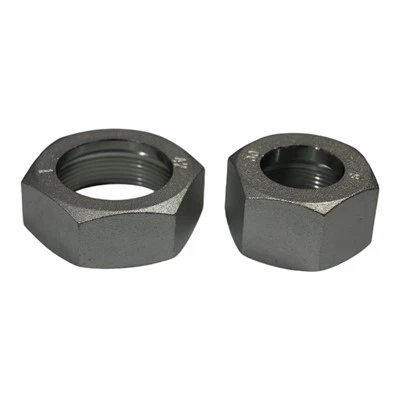
Screw nuts are crucial components in countless industries, from automotive to construction, and the accuracy of their dimensions can significantly impact the performance and safety of the final products. As a screw nut supplier, I understand the importance of precise measurements, especially the diameter of a screw nut. In this blog, I’ll share several methods to measure the diameter of a screw nut, which will not only help manufacturers and engineers ensure quality control but also assist our customers in making informed purchasing decisions. Screw Nut
Why Measuring the Diameter of a Screw Nut is Important
Before delving into the measurement methods, it’s essential to understand why accurately measuring the diameter of a screw nut matters. The diameter of a screw nut directly affects its fit with the corresponding screw. If the nut’s diameter is too large, it may not provide a secure connection, leading to loosening and potential failure of the assembly. Conversely, if the diameter is too small, it may not be able to be threaded onto the screw at all, making the nut unusable.
In addition to the fit, the diameter also plays a role in the load – bearing capacity of the nut – screw combination. A nut with an incorrect diameter may not distribute the load evenly, which can cause premature wear and tear on both the nut and the screw, reducing the lifespan of the entire joint.
Methods for Measuring the Diameter of a Screw Nut
1. Vernier Caliper
The vernier caliper is a common and reliable tool for measuring the diameter of a screw nut. It can provide measurements with relatively high precision.
- External Diameter Measurement: Open the jaws of the caliper and place them around the outer circumference of the screw nut. Ensure that the caliper jaws are perpendicular to the axis of the nut. Gently tighten the jaws until they make contact with the nut’s surface. Then, read the measurement on the main scale and the vernier scale. The combined value gives the external diameter of the nut.
- Internal Diameter Measurement: For measuring the internal diameter (the diameter of the threaded hole), use the smaller, inner jaws of the vernier caliper. Insert the jaws into the threaded hole of the nut and expand them until they make contact with the opposite sides of the hole. Similar to the external diameter measurement, read the value on the scales to get the internal diameter.
However, it’s important to note that when measuring the internal diameter of a threaded nut, the measurement is often taken at the root of the thread, which may not be exactly the same as the nominal diameter specified in the standards.
2. Micrometer
Micrometers are even more precise than vernier calipers, making them suitable for applications where high – accuracy measurements are required.
- External Measurement: There are two main types of micrometers that can be used for screw nut diameter measurement: outside micrometers and micrometer calipers. For an outside micrometer, place the screw nut between the anvil and the spindle. Rotate the thimble until the nut is gently held in place. The measurement can be read from the sleeve and the thimble of the micrometer. Micrometer calipers work in a similar way but offer more flexibility in some cases, especially when measuring nuts with irregular shapes.
- Internal Measurement: An inside micrometer can be used to measure the internal diameter of the screw nut. The procedure involves inserting the micrometer into the threaded hole and adjusting it until it makes contact with the inner surfaces. Reading the measurement on the inside micrometer follows a specific scale – reading method, which requires some practice to master accurately.
3. Thread Gauge and Caliper Combination
In some cases, especially when dealing with threaded nuts, a combination of a thread gauge and a caliper can be used. First, use a thread gauge to determine the pitch and the thread form of the nut. This will help in understanding the characteristics of the thread. Then, use a caliper to measure the diameter at specific points on the thread. For example, you can measure the diameter at the crest and the root of the thread. This method is useful for ensuring that the nut meets the required thread standards, as the diameter at different parts of the thread is specified in the standards.
4. Optical Measuring Instruments
For extremely high – precision applications, optical measuring instruments such as coordinate measuring machines (CMMs) and optical comparators can be used.
- Coordinate Measuring Machines (CMMs): A CMM uses a probe to touch various points on the surface of the screw nut. The machine records the coordinates of these points in a three – dimensional space. By analyzing these coordinates, the diameter and other geometric parameters of the nut can be accurately determined. CMMs are highly accurate but also relatively expensive and require trained operators.
- Optical Comparators: These instruments project an enlarged image of the screw nut onto a screen. By comparing the projected image with a set of standard templates or by using software to measure the dimensions on the screen, the diameter of the nut can be measured. Optical comparators are useful for quickly inspecting a large number of nuts and can provide a non – contact measurement method, which is beneficial for delicate or soft – material nuts.
Considerations When Measuring Screw Nut Diameters
- Measurement Location: When measuring the diameter of a screw nut, it’s important to select the correct measurement location. For example, for a hexagon nut, the diameter can be measured across the flats or across the corners. The standard usually specifies which measurement is relevant for a particular application.
- Thread Interference: When measuring the internal diameter of a threaded nut, the thread can interfere with the measurement. In some cases, special thread – measuring tools or techniques may be required to get an accurate measurement of the effective diameter of the thread.
- Material and Surface Finish: The material of the screw nut and its surface finish can also affect the measurement. Soft materials may deform slightly under the pressure of the measuring tool, leading to inaccurate measurements. Rough or irregular surface finishes may make it difficult to get a consistent alignment of the measuring tool with the nut’s surface.
Role of Measurement in Screw Nut Supply
As a screw nut supplier, accurate measurement is at the core of our quality control process. We use a combination of the above – mentioned methods to ensure that every screw nut we supply meets the required standards. We understand that our customers rely on the accuracy of our products in their own manufacturing processes. By providing high – quality, precisely measured screw nuts, we help our customers improve the reliability and performance of their final products.

In addition, we also offer measurement assistance to our customers. If you are unsure about how to measure the diameter of a screw nut or have any questions regarding the measurement results, our team of experts is always ready to help. We can provide guidance on the appropriate measurement methods based on the type of nut you are using and the application requirements.
Conclusion
Hydraulic Fittings Measuring the diameter of a screw nut is a crucial step in ensuring the quality and functionality of the nut – screw combination. Whether you are a manufacturer, an engineer, or a buyer, understanding the different measurement methods and considerations can help you make informed decisions. As a screw nut supplier, we are committed to providing high – quality, accurately measured products. If you are in the market for screw nuts or need further assistance with measurement and quality control, please feel free to contact us to start a discussion about your procurement needs.
References
- ISO 4032: General purpose metric hexagon nuts.
- ASME B18.2.2: Square and Hex Nuts (Inch Series).
- Machinery’s Handbook, which provides comprehensive information on screw nut dimensions and measurement techniques.
Yuyao Huiqiang Fluid Connectors Co., Ltd.
As one of the most professional screw nut manufacturers and suppliers in China, we also support customized service with low price. Please feel free to wholesale cheap screw nut in stock here from our factory. Welcome to view our website for more information.
Address: No. 102, Wenwei Road, Zhangting Town, Yuyao City, Ningbo City, Zhejiang Province
E-mail: huiqiangliuti@aliyun.com
WebSite: https://www.huiqiangfitting.com/
