When it comes to the world of surface finishing and material removal, abrasive pads are an indispensable tool. As a seasoned provider of abrasive pads, I’ve seen firsthand the diverse needs and challenges that customers face when it comes to selecting the right product. In this blog, I’ll share my insights and expertise on how to choose the perfect abrasive pads for your specific application. Abrasive Pads

Understanding the Basics of Abrasive Pads
Before delving into the selection process, it’s essential to understand the fundamental components of abrasive pads. Abrasive pads consist of three primary elements: the abrasive grains, the bonding agent, and the backing material.
The abrasive grains are the cutting agents that remove material from the surface. Common types of abrasive grains include aluminum oxide, silicon carbide, zirconia alumina, and ceramic aluminum oxide. Each type of abrasive has its unique properties, such as hardness, toughness, and cutting ability, which make it suitable for different applications.
The bonding agent holds the abrasive grains in place and determines the pad’s durability and flexibility. There are several types of bonding agents, including resin, rubber, and shellac. The choice of bonding agent depends on the application and the desired level of aggression.
The backing material provides support for the abrasive grains and bonding agent and affects the pad’s flexibility, conformability, and durability. Common backing materials include paper, cloth, film, and non – woven fabric.
Consider the Application
The most critical factor in choosing the right abrasive pad is the application. Different applications require different types of abrasive pads based on the material being worked on, the desired finish, and the amount of material to be removed.
Metalworking
In metalworking applications, such as deburring, blending, and finishing, you’ll need abrasive pads that can withstand high pressures and temperatures. Aluminum oxide and zirconia alumina are popular choices for metalworking because they are hard and durable. For heavy – duty material removal, zirconia alumina pads are often preferred due to their high self – sharpening properties. For a finer finish, aluminum oxide pads can be used.
Woodworking
When working with wood, the goal is usually to achieve a smooth finish. Silicon carbide abrasive pads are ideal for woodworking because they produce a fine finish and are less likely to clog compared to other abrasives. Non – woven abrasive pads are also popular in woodworking, especially for sanding contoured surfaces and removing old finishes.
Automotive Refinishing
Automotive refinishing requires a high – quality finish. Ceramic aluminum oxide and silicon carbide abrasive pads are commonly used in this industry. Ceramic aluminum oxide pads are known for their long life and fast cutting ability, making them suitable for sanding and leveling automotive paint. Silicon carbide pads are often used for wet sanding to achieve a very smooth finish.
Grit Size Selection
Grit size refers to the number of abrasive grains per square inch on the surface of the pad. A lower grit size (e.g., 40 – 60) indicates larger abrasive grains and is used for heavy – duty material removal, such as rough shaping or removing thick coatings. A higher grit size (e.g., 220 – 600) means smaller abrasive grains and is used for fine finishing and polishing.
For example, if you’re starting with a rough metal surface and need to remove a significant amount of material quickly, a 40 – 60 grit abrasive pad is a good choice. After the initial material removal, you can switch to a higher grit pad, like 120 – 180, for intermediate sanding. Finally, for a smooth, polished finish, use a 220 – 600 grit pad.
It’s important to choose the right grit size sequence to achieve the desired finish efficiently. Skipping grit sizes can result in an uneven surface finish and may require additional sanding to correct.
Pad Type
There are several types of abrasive pads available on the market, each with its unique features and benefits.
Hook – and – Loop Pads
Hook – and – loop abrasive pads are easy to attach and remove from sanders, which makes them convenient for quick pad changes. They are commonly used with orbital sanders and random – orbit sanders. This type of pad provides a secure connection to the sander, ensuring that the pad stays in place during operation.
PSA (Pressure – Sensitive Adhesive) Pads
PSA pads are adhered to the sander using a pressure – sensitive adhesive. They offer a strong bond and are suitable for high – speed sanding applications. PSA pads are often used with disc sanders and are available in a variety of sizes and grits.
Non – Woven Abrasive Pads
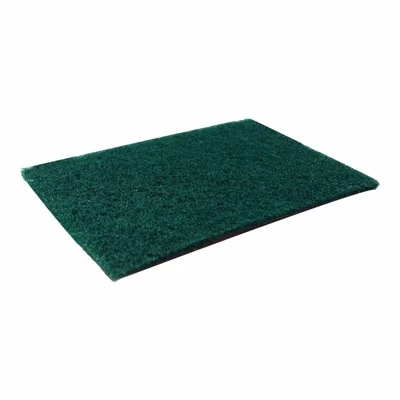
Non – woven abrasive pads are made from a web of fibers impregnated with abrasive grains. They are flexible, conformable, and can be used for a wide range of applications, including cleaning, polishing, and light material removal. Non – woven pads are also less likely to leave scratches on the surface compared to other types of abrasive pads.
Durability and Cost
When choosing an abrasive pad, it’s important to consider both durability and cost. A more durable abrasive pad may cost more upfront but can save you money in the long run by lasting longer and requiring fewer replacements.
Cheaper abrasive pads may seem like a good deal at first, but they may wear out quickly, leading to frequent replacements and increased downtime. On the other hand, high – quality abrasive pads may be more expensive, but they offer better performance, a longer lifespan, and a more consistent finish.
It’s also important to consider the cost per unit of material removed. A high – performance abrasive pad may remove material more quickly and efficiently, reducing the overall cost of the sanding operation.
Compatibility with Equipment
Make sure the abrasive pad you choose is compatible with your sanding equipment. Different sanders have different requirements in terms of pad size, shape, and attachment method.
For example, some orbital sanders require a specific diameter of hook – and – loop pads, while belt sanders use continuous abrasive belts. Using an incompatible abrasive pad can result in poor performance, uneven sanding, and even damage to the equipment.
Conclusion
Choosing the right abrasive pad is a crucial step in achieving high – quality surface finishing and efficient material removal. By considering the application, grit size, pad type, durability, cost, and compatibility with equipment, you can select the perfect abrasive pad for your needs.
Scrub Sponges As a trusted supplier of abrasive pads, I’m committed to helping you find the right product for your specific application. Whether you’re a professional tradesperson or a DIY enthusiast, I have the expertise and a wide range of products to meet your requirements. If you have any questions or need further assistance in choosing the right abrasive pads, feel free to contact me to discuss your procurement needs. I look forward to working with you to achieve the best results for your projects.
References
- "Handbook of Abrasive Technology" by Michael J. Jackson
- "Modern Abrasives and Their Applications" by R. W. Hockert
- Various industry technical papers on abrasive materials and surface finishing.
Guangzhou YION New Material Technology Co., Ltd.
As one of the most professional abrasive pads manufacturers and suppliers in China, we offer a wide range of products with superior quality. Please feel free to buy customized abrasive pads made in China here from our factory. Also, quotation is available.
Address: Room 110, Building 2, No. 2 Jinhuan Street, Nansha District, Guangzhou City, Guangdong Province, China.
E-mail: info@yiontech.cn
WebSite: https://www.yionpads.com/
