Introduction
As a well – established flyback transformer supplier, I’m often asked about the crucial topic of selecting the appropriate switching frequency for a flyback transformer. The switching frequency is a fundamental parameter that significantly impacts the performance, efficiency, size, and cost of the overall power supply system. In this blog, I’ll share some in – depth insights into the process of choosing the right switching frequency for a flyback transformer. Flyback Transformer
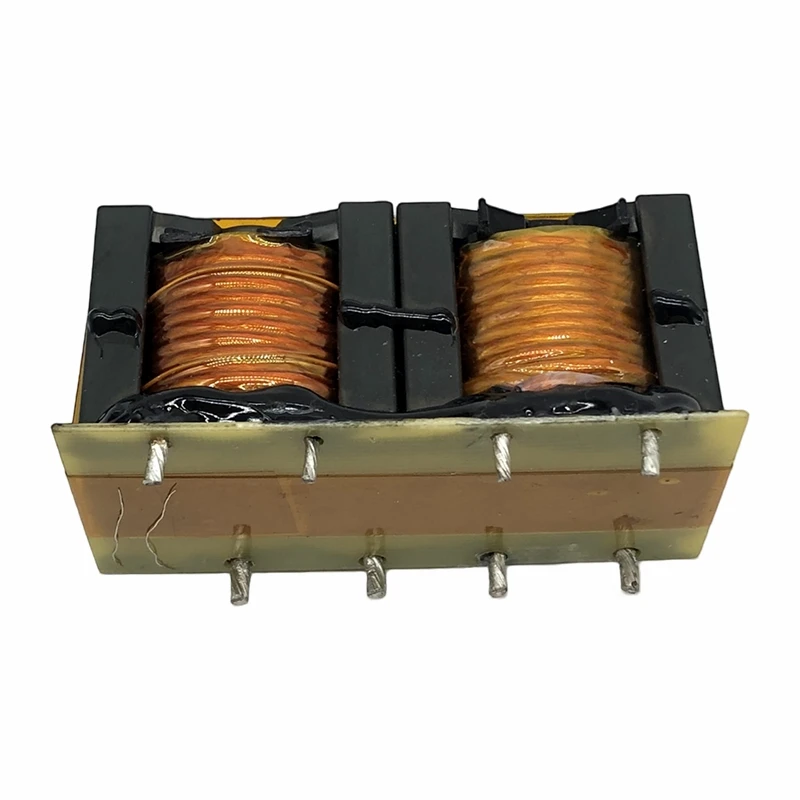
Understanding Flyback Transformers
Before delving into the switching frequency selection, it’s essential to understand the basic working principle of flyback transformers. A flyback transformer is a type of switched – mode power supply (SMPS) transformer. It stores energy in the magnetic field when the switch is turned on, and then releases that energy to the output circuit when the switch is turned off. This energy – storage and transfer mechanism allows the flyback transformer to efficiently convert electrical energy from the input to the output with different voltage levels.
Influence of Switching Frequency on Performance
Efficiency
The efficiency of a flyback transformer is directly related to the switching frequency. At lower switching frequencies, the switching losses are relatively small because the number of switching events per unit time is low. However, the core losses and the size of the magnetic components (such as the inductor and the transformer) are usually larger. As the switching frequency increases, the switching losses increase due to the higher rate of switching. But the core losses can be reduced as the magnetic components can be made smaller, and the ripple current in the output capacitor can also be decreased.
There is an optimal switching frequency range where the total losses (switching losses + core losses + other losses) are minimized, resulting in the highest efficiency. For example, in some low – power applications, a switching frequency in the range of 50 – 100 kHz might be sufficient to achieve good efficiency. In high – power and high – density applications, frequencies in the range of 200 kHz – 1 MHz or even higher could be more appropriate.
Size and Weight
Higher switching frequencies allow for the use of smaller magnetic components. The size of the inductor and the transformer in a flyback power supply is inversely proportional to the switching frequency. As the frequency increases, the amount of energy stored per cycle decreases, which means that the magnetic core can be made smaller. This is a significant advantage in applications where space and weight are critical, such as in portable devices and aerospace applications.
However, increasing the frequency also requires more sophisticated heat – dissipation mechanisms for the power switches because of the increased switching losses. So, a balance needs to be struck between the size reduction and the heat – management requirements.
Electromagnetic Interference (EMI)
Switching frequency has a direct impact on EMI. Higher switching frequencies generate higher – frequency harmonics, which can radiate electromagnetic energy more easily and interfere with other electronic devices in the vicinity. The switching edges of the power switches can also generate high – frequency transients, which contribute to conducted and radiated EMI.
To mitigate EMI, filter circuits are often required. At lower frequencies, the filter components can be larger and less expensive. As the switching frequency increases, the filter design becomes more challenging, and smaller but more expensive filter components may be needed. Therefore, when selecting the switching frequency, the EMI requirements of the application must be carefully considered.
Factors to Consider When Selecting Switching Frequency
Application Requirements
The specific requirements of the application play a vital role in determining the switching frequency. For example, in battery – powered portable devices, efficiency and size are of utmost importance. A higher switching frequency can be chosen to reduce the size of the magnetic components, even though the switching losses may increase slightly. In industrial power supplies, where reliability and cost – effectiveness are key, a lower switching frequency may be preferred to minimize the complexity of the circuit and the cost of the components.
Power Level
The power level of the flyback transformer also affects the switching frequency selection. In low – power applications (less than 100 W), a relatively high switching frequency can be used without causing excessive switching losses. For medium – power applications (100 – 500 W), a frequency in the range of 100 – 300 kHz is often a good compromise between efficiency, size, and EMI. In high – power applications (greater than 500 W), lower frequencies may be more suitable to keep the switching losses under control.
Component Availability and Cost
The availability and cost of the power components, such as the switching transistors and the magnetic core materials, are important factors. Some high – frequency switching transistors may be more expensive or less readily available. Similarly, certain magnetic core materials are more suitable for high – frequency operation but may also be costlier.
For example, if a design requires a high – switching frequency, but the high – frequency transistors are prohibitively expensive, it may be necessary to lower the switching frequency to use more cost – effective components.
Practical Steps for Selecting the Switching Frequency
Step 1: Define Application Requirements
First, clearly define the requirements of the application, including the input and output voltage levels, the power output, the size and weight constraints, and the EMI specifications. This will provide a framework for the switching frequency selection.
Step 2: Analyze Losses
Calculate the expected switching losses, core losses, and other losses at different switching frequencies. Use theoretical models and simulation tools to estimate these losses. Based on the loss analysis, identify the frequency range where the total losses are minimized.
Step 3: Consider Component Selection
Research the available power components, such as switching transistors and magnetic cores, and their performance characteristics at different frequencies. Select components that are compatible with the chosen switching frequency range and meet the cost and performance requirements.
Step 4: Prototyping and Testing
Build a prototype of the flyback transformer power supply with the initially selected switching frequency. Test the prototype to measure the efficiency, output voltage regulation, EMI levels, and other performance parameters. If necessary, adjust the switching frequency based on the test results to optimize the performance.
Conclusion
Selecting the appropriate switching frequency for a flyback transformer is a complex process that requires a comprehensive understanding of the application requirements, the performance characteristics of the components, and the trade – offs between efficiency, size, and EMI. By carefully considering all these factors and following the practical steps outlined above, it is possible to choose a switching frequency that maximizes the performance and cost – effectiveness of the flyback transformer power supply.
Current Transformer As a flyback transformer supplier, we have the expertise and experience to help you select the most suitable switching frequency for your specific application. Our team of engineers can work closely with you to understand your requirements, provide technical support, and offer customized solutions. If you are interested in purchasing flyback transformers or need further advice on switching frequency selection, please feel free to contact us for a detailed discussion.
References
- Erickson, Robert W., and Dragan Maksimovic. "Fundamentals of Power Electronics." Springer Science & Business Media, 2001.
- Pressman, Abraham I., et al. "Switching Power Supply Design." McGraw – Hill, 2009.
- Mohan, Ned, Tore M. Undeland, and William P. Robbins. "Power Electronics: Converters, Applications, and Design." John Wiley & Sons, 2012.
Dongguan Hensiron Electric Co., Ltd.
As one of the most professional flyback transformer suppliers in China, we have world-leading production equipment and strong manufacturing capabilities. Please feel free to buy high quality flyback transformer made in China here from our factory. Customized orders are welcome.
Address: Building 4, Xinxing Industrial Zone, Wangao Road, Wanjiang Street, Dongguan City, China
E-mail: jessica@dghensiron.com
WebSite: https://www.dghensiron.com/
