Hey there! As a supplier of coating machines, I often get asked about the calibration method. So, I thought I’d share some insights on what the coating machine calibration method is all about. Coating Machine

First off, let’s understand why calibration is so important. A coating machine needs to be calibrated to ensure that it’s working accurately. If it’s not calibrated properly, the coating thickness might be inconsistent, the coating quality could be poor, and it could lead to a whole bunch of problems. So, calibration is like tuning up a car – it keeps everything running smoothly.
Types of Calibration
There are basically two main types of calibration for coating machines: static calibration and dynamic calibration.
Static Calibration
Static calibration is done when the machine is not in operation. It’s like checking the settings and components of the machine when it’s at rest. This involves measuring things like the gap between the coating head and the substrate, the pressure of the coating material, and the temperature of the coating chamber.
For example, to measure the gap between the coating head and the substrate, we use a feeler gauge. It’s a simple tool that helps us make sure the gap is just right. If the gap is too wide, the coating might be too thin. If it’s too narrow, the coating could be too thick.
We also check the pressure of the coating material. This is usually done using a pressure gauge. The pressure needs to be consistent to ensure a uniform coating. If the pressure is too high, the coating might splash or be uneven. If it’s too low, the coating might not cover the substrate properly.
Temperature is another important factor. The coating material might have a specific temperature range in which it works best. So, we use a thermometer to check the temperature of the coating chamber and make sure it’s within the right range.
Dynamic Calibration
Dynamic calibration is done when the machine is in operation. This is where we really see how the machine performs under real – world conditions.
One of the key things we look at during dynamic calibration is the coating thickness. We use a coating thickness gauge to measure how thick the coating is on the substrate. This gauge can be based on different principles, like magnetic induction or eddy current.
We also check the speed of the substrate as it passes through the coating machine. The speed needs to be consistent to ensure a uniform coating. If the speed is too fast, the coating might not have enough time to spread evenly. If it’s too slow, the coating might build up in some areas.
Another aspect of dynamic calibration is the flow rate of the coating material. We use a flow meter to measure how much coating material is being applied per unit of time. This helps us make sure that the right amount of coating is being used.
The Calibration Process
Now, let’s talk about the actual calibration process. It usually involves the following steps:
- Pre – calibration Checks: Before we start the calibration, we need to make sure the machine is clean and in good working condition. We check for any signs of wear and tear on the components, and we make sure all the connections are secure.
- Setting the Baseline: We establish a baseline for the machine’s performance. This means measuring the initial values of things like gap, pressure, temperature, etc. These values will serve as a reference for the calibration.
- Making Adjustments: Based on the measurements we take, we make adjustments to the machine. For example, if the coating thickness is too thick, we might adjust the gap between the coating head and the substrate or the pressure of the coating material.
- Testing and Verification: After making the adjustments, we run some test coatings on a sample substrate. We measure the coating thickness, quality, and other parameters to make sure the calibration has been successful. If the results are not satisfactory, we go back and make more adjustments.
- Documentation: Finally, we document the calibration process. This includes recording all the measurements, adjustments, and test results. This documentation is important for quality control and for future reference.
Challenges in Calibration
Calibrating a coating machine is not always a walk in the park. There are some challenges that we often face.
One of the biggest challenges is dealing with different types of coating materials. Different materials have different properties, such as viscosity, density, and drying time. These properties can affect the calibration process. For example, a high – viscosity coating material might require a different pressure and flow rate than a low – viscosity one.
Another challenge is the wear and tear of the machine components over time. As the machine is used, the coating head, rollers, and other parts can wear out. This can affect the calibration and lead to inconsistent coating results. So, we need to regularly check and replace these components to ensure accurate calibration.
Environmental factors can also play a role. Temperature, humidity, and air quality can all affect the coating process. For example, high humidity can cause the coating to dry more slowly, which can affect the coating thickness and quality.
Why Choose Our Coating Machines
At our company, we take calibration seriously. Our coating machines are designed to be easy to calibrate. We provide detailed instructions and support to our customers to help them with the calibration process.
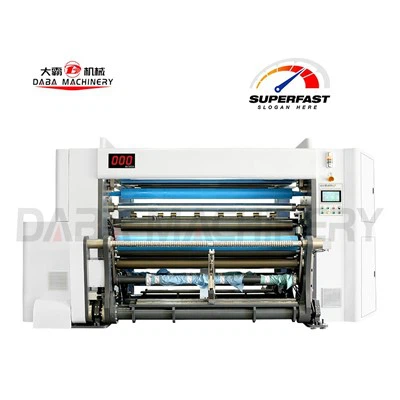
We also use high – quality components in our machines. This reduces the wear and tear and ensures that the calibration remains accurate for a longer period of time. Our machines are also equipped with advanced sensors and controls that make the calibration process more precise.
Flat Bag Making Machine If you’re in the market for a coating machine, we’d love to talk to you. Whether you’re a small business looking for a simple coating solution or a large – scale manufacturer in need of a high – performance machine, we have the right product for you. Contact us to discuss your requirements and find out how our coating machines can meet your needs.
References
- Coating Technology Handbook, 3rd Edition
- Industrial Coating Equipment Manual
- Best Practices in Coating Machine Calibration, Industry Report
Wenzhou Daba Machinery Co., Ltd.
With abundant experience, we are one of the most professional coating machine manufacturers and suppliers in China. We warmly welcome you to wholesale advanced coating machine at competitive price from our factory. If you have any enquiry about cooperation, please feel free to email us.
Address: Qianbu Industrial Zone, Xincheng Street, Ruian City, Wenzhou, China.
E-mail: info1@dabamachinery.com
WebSite: https://www.dabaflexpack.com/
