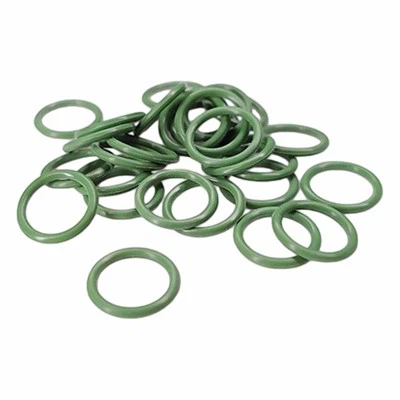
As a supplier of HNBR O rings, I often receive inquiries from customers about the chemical resistance of our products. One question that comes up frequently is whether HNBR O rings are resistant to esters. In this blog post, I will delve into this topic, providing a comprehensive analysis based on scientific knowledge and practical experience. HNBR O Ring
Understanding HNBR O Rings
HNBR, or Hydrogenated Nitrile Butadiene Rubber, is a synthetic elastomer known for its excellent resistance to a wide range of chemicals, high temperatures, and abrasion. It is derived from nitrile rubber (NBR) through a hydrogenation process, which saturates the carbon – carbon double bonds in the polymer chain. This results in a more stable and durable material compared to NBR.
HNBR O rings are used in various industries, including automotive, aerospace, oil and gas, and chemical processing. Their ability to withstand harsh environments makes them a popular choice for sealing applications where reliability is crucial.
Esters: A Chemical Overview
Esters are a class of organic compounds formed by the reaction between an acid and an alcohol, with the general formula R – COO – R’. They are widely used in industry as solvents, plasticizers, lubricants, and flavoring agents. Esters can vary significantly in their chemical properties depending on the nature of the R and R’ groups. Some common esters include ethyl acetate, butyl acetate, and dioctyl phthalate.
Chemical Resistance of HNBR O Rings to Esters
The chemical resistance of HNBR O rings to esters depends on several factors, including the type of ester, the concentration, temperature, and exposure time.
Type of Ester
Not all esters have the same effect on HNBR. Some esters are relatively mild and have little impact on HNBR, while others can cause significant swelling, degradation, or loss of mechanical properties. For example, short – chain esters like ethyl acetate and methyl acetate are more likely to cause swelling in HNBR due to their relatively high solubility in the rubber matrix. On the other hand, long – chain esters or esters with bulky substituents may have a lower affinity for HNBR and thus cause less damage.
Concentration
The concentration of the ester in the environment also plays a crucial role. Higher concentrations of esters are more likely to cause adverse effects on HNBR O rings. At low concentrations, HNBR may be able to withstand the exposure without significant degradation. However, as the concentration increases, the risk of swelling, softening, or loss of elasticity also increases.
Temperature
Temperature has a significant influence on the chemical resistance of HNBR O rings to esters. Higher temperatures accelerate the chemical reactions between the ester and the rubber, increasing the rate of swelling and degradation. For example, at room temperature, HNBR may show good resistance to a particular ester, but when the temperature rises, the same ester may cause more severe damage to the O ring.
Exposure Time
Prolonged exposure to esters can gradually degrade HNBR O rings. Even if the initial exposure does not cause significant damage, over time, the ester can penetrate the rubber matrix, leading to changes in its physical and mechanical properties. This can result in reduced sealing performance and potentially lead to system failures.
Laboratory Testing and Results
To accurately assess the resistance of HNBR O rings to esters, laboratory testing is essential. Our company conducts a series of tests using different esters at various concentrations and temperatures. These tests typically involve immersing HNBR O rings in the ester for a specified period and then measuring changes in weight, volume, hardness, and tensile strength.
In our tests, we have found that HNBR O rings generally show good resistance to some esters, especially those with lower reactivity. For example, HNBR can withstand exposure to certain high – molecular – weight esters used in lubricant formulations without significant swelling or loss of mechanical properties. However, when exposed to more aggressive esters, such as some short – chain acetates, the O rings may experience swelling and a decrease in hardness.
Practical Applications and Case Studies
In real – world applications, the performance of HNBR O rings in ester – containing environments can vary. In the automotive industry, for example, HNBR O rings are used in fuel systems where they may come into contact with esters present in biofuels. In these applications, the O rings need to maintain their sealing properties over a long period. Our customers have reported good performance of our HNBR O rings in such environments, but it is important to select the right grade of HNBR based on the specific ester and operating conditions.
In the chemical processing industry, HNBR O rings are used in pumps, valves, and other equipment where they may be exposed to a variety of esters. By carefully considering the chemical compatibility and operating conditions, we can recommend the most suitable HNBR O rings for these applications.
Conclusion
In conclusion, HNBR O rings can have varying degrees of resistance to esters depending on the type of ester, concentration, temperature, and exposure time. While HNBR offers good chemical resistance in many cases, it is crucial to conduct proper testing and select the appropriate grade of HNBR for specific applications.
Flange Gasket As a supplier of HNBR O rings, we are committed to providing our customers with high – quality products and technical support. If you are considering using HNBR O rings in an application where esters are present, we encourage you to contact us for more information. Our team of experts can help you select the right O rings based on your specific requirements and provide guidance on installation and maintenance. We are ready to engage in discussions and offer solutions to meet your sealing needs.
References
- ASTM D471 – Standard Test Method for Rubber Property – Effect of Liquids
- ISO 1817 – Rubber, Vulcanized or Thermoplastic – Determination of Resistance to Liquids
- "Handbook of Elastomers" by I. Franta
Haining Chaoyue Seals Co., Ltd.
As one of the most professional hnbr o ring manufacturers and suppliers in China, we offer a wide range of products with superior quality. Please feel free to wholesale high quality hnbr o ring made in China here from our factory. Also, custom service is available.
Address: Building 9, 158 Lianhong Road, Yuanhua Town, Jiaxing, Zhejiang, China.
E-mail: chaoyue@cyseals.com
WebSite: https://www.hncyseal.com/
